
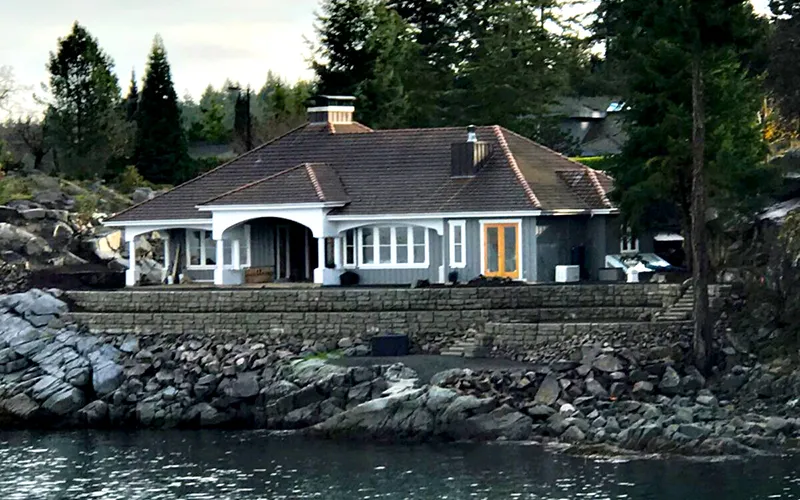
Project Overview
A residential waterfront property on Vancouver Island required shoreline stabilization to address ongoing erosion caused by tidal fluctuation, storm surge, and saturated native soils.
In addition to slope retention, the design needed to support new outdoor living infrastructure constructed immediately adjacent to the shoreline, within a constrained setback area.
Design Challenge
Typical cast-in-place retaining solutions posed several limitations for this site condition, including:
- extended construction timelines within tidal work windows
- hydrostatic pressure management
- reduced constructability in restricted access areas
- long-term durability concerns in saturated freeze–thaw environments
A mass gravity solution was required to resist lateral loads while allowing drainage through the retained zone.
Cost savings: The poured concrete option was quoted at $250,000.
The Redi-Rock solution came in at only $90,000.
Retaining Solution
A Redi-Rock large block gravity wall system was installed to provide shoreline retention and structural support for hardscape features constructed at the top of wall.
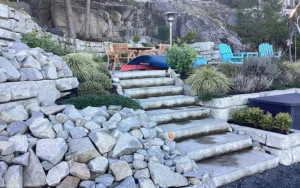
The installation stabilized the shoreline while creating structurally supported outdoor space
The precast wet-cast system enabled:
- installation with an excavator and small crew
- minimal excavation within shoreline setback limits
- free-draining granular backfill to reduce hydrostatic pressure
- durability in saturated coastal soil conditions
The completed wall supports:
- stamped concrete infinity-edge deck
- railing system attachment
- integrated irrigation and electrical infrastructure
- tiered landscape loading
Freestanding units were incorporated at the upper courses to provide a finished barrier compatible with pedestrian use and accessory attachments.
Outcome
The installation stabilized the shoreline while creating structurally supported outdoor space without increasing the project footprint toward the water.
The Redi-Rock system provided:
- immediate erosion protection
- reduced installation time compared to CIP alternatives
- improved constructability within limited access conditions
- long-term performance in a marine-influenced freeze–thaw environment
This project demonstrates the applicability of large-block gravity systems for residential shoreline retention where structural performance and constructability are primary design drivers.
Related Projects
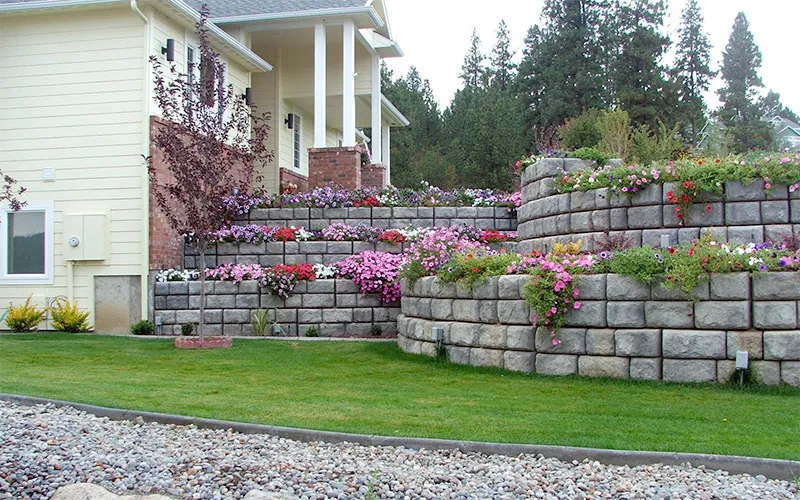
A Step-by-Step Guide for Sloped, Shoreline & Small-Footprint Properties STEP 1 — Identify the Problem to Solve Many homes across....
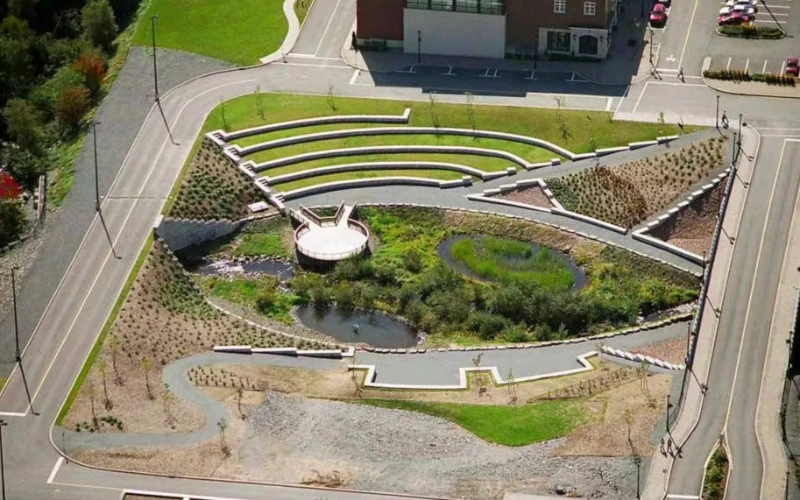
Bridge-Crossing Problem As part of a $300M redevelopment in Dartmouth, Nova Scotia, engineers were tasked with constructing multiple bridge crossings....
Lessons From New Zealand That Apply Directly to British Columbia Across much of British Columbia, particularly along coastal corridors and....
Project Overview Before: decades of erosion and structural failure A private marina on a Gulf Islands, British Columbia....