Earth Retention &
Stabilization
Engineered to Hold Back What Nature Pushes Forward
Earth Management with Redi Rock Retaining Wall Systems
Across British Columbia’s coastal and mountainous terrain, erosion is no longer just a landscaping concern, it’s a structural one. Intense rainfall events, seasonal stormwater runoff, and rising water levels are increasingly undermining slopes that support roads, infrastructure, and residential developments.
In roadway applications, stormwater has been shown to rapidly destabilize embankments, in some cases turning roads into “raging rivers” during heavy rainfall events and causing millions in infrastructure damage due to washouts and slope failure. Similarly, shoreline erosion adjacent to infrastructure can remove slope support entirely, leaving underlying rock exposed and roadways vulnerable to collapse.
As development continues along waterways and on steep terrain throughout BC, retaining solutions must now function as structural stabilization systems, not just grade separation features.
Redi Rock Solving Critical Earth Retention Challenges
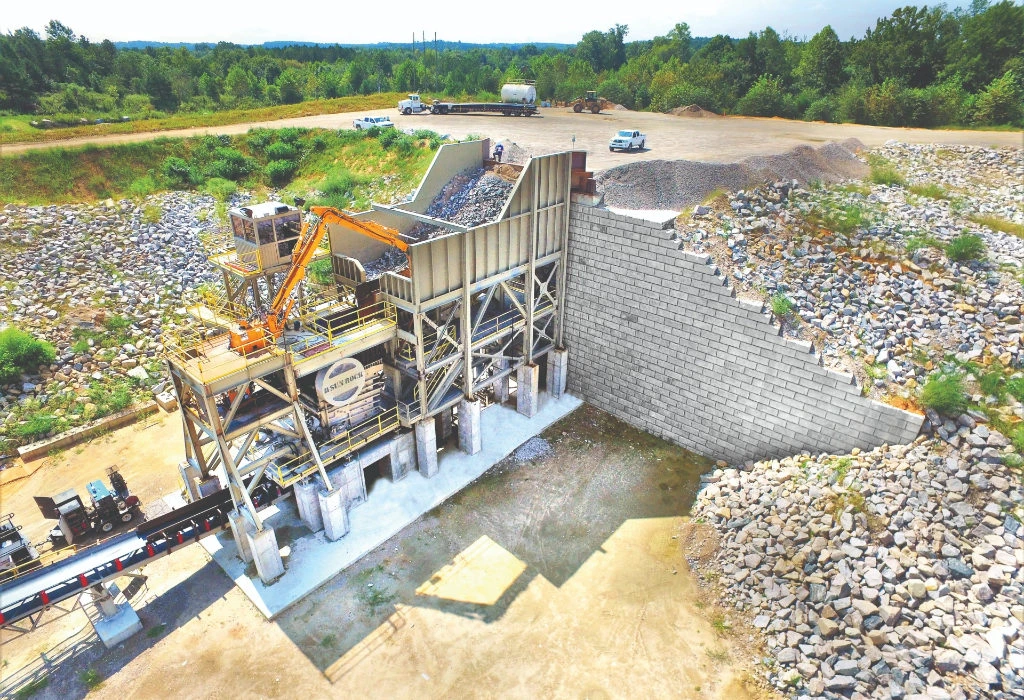
Redi-Rock is an engineered precast modular retaining wall system designed to stabilize slopes in environments where erosion, water movement, and limited excavation depth are key challenges. Using massive one-ton wet-cast concrete blocks, Redi-Rock gravity retaining walls rely on structural mass to resist lateral soil pressure rather than soil reinforcement or deep tiebacks.
Why is Redi-Rock the Best Solution for Earth Retention?
Traditional reinforced retaining systems often require extensive excavation behind the wall for geogrid placement, which can be impractical in BC where our terrain can be limited or challenging.
Environmental Considerations
Designed for BC’s sensitive waterways and steep terrain, Redi-Rock retaining walls control erosion while minimizing site disturbance. Reduced excavation helps protect adjacent habitats, manage stormwater movement, and stabilize slopes without significant environmental impact.
Reduced Installation Time
Gravity and reinforced retaining walls built from machine-set modular blocks reduce excavation and disruption to infrastructure or habitat. Smaller crews enable faster installation timelines — critical when catastrophic erosion has washed out roads or compromised essential infrastructure.
Hybrid Wall Solutions
Redi-Rock Hybrid Wall Systems combine gravity mass with geo grid reinforcement to stabilize taller slopes within tight footprints. This flexible approach manages lateral earth pressures and stormwater conditions common to BC’s steep, erosion-prone environments.
Infrastructure & Shoreline Protection
When properly designed and installed, wet-cast gravity retaining wall systems provide 75–100 years of service life, protecting roads, shorelines, and infrastructure from erosion, slope instability, and ongoing stormwater impacts in vulnerable environments.
Applications in BC Earth Retention Projects
Redi-Rock systems are commonly used in water-impacted infrastructure projects where erosion control and slope stabilization are required, including:
- Roadway embankments
- Shoreline protection
- Riverbanks and seawalls
- Storm water detention ponds
- Culvert headwalls and channels
- Hillside residential developments
- Transportation corridors
For taller slope transitions or roadway construction, reinforced retaining wall systems such as the Redi-Rock Positive Connection (PC) System can be used to achieve wall heights exceeding 12.5 metres (41 feet) where gravity systems alone are not feasible.
In these applications, designers can combine gravity structures with reinforced systems to efficiently manage significant grade changes while maintaining construction speed and aesthetic integration into natural environments.
Design Considerations for Steep Slopes and Storm Water Environments
In high-rainfall environments like BC, retaining wall design must account for both soil loads and hydrostatic pressure generated by groundwater infiltration and storm water runoff. Hydrostatic pressure is the force created when water builds up in soil and pushes against a retaining wall. In BC’s high-rainfall environments, managing this pressure through proper drainage is essential to prevent wall movement, slope instability, or structural failure.
Key considerations include:
- Adequate drainage layers behind the wall
- Base preparation on native or rock subgrade
- Batter (setback) to improve global stability
- Resistance to surcharge loads from roads or structures
- Minimizing excavation in erosion-sensitive areas
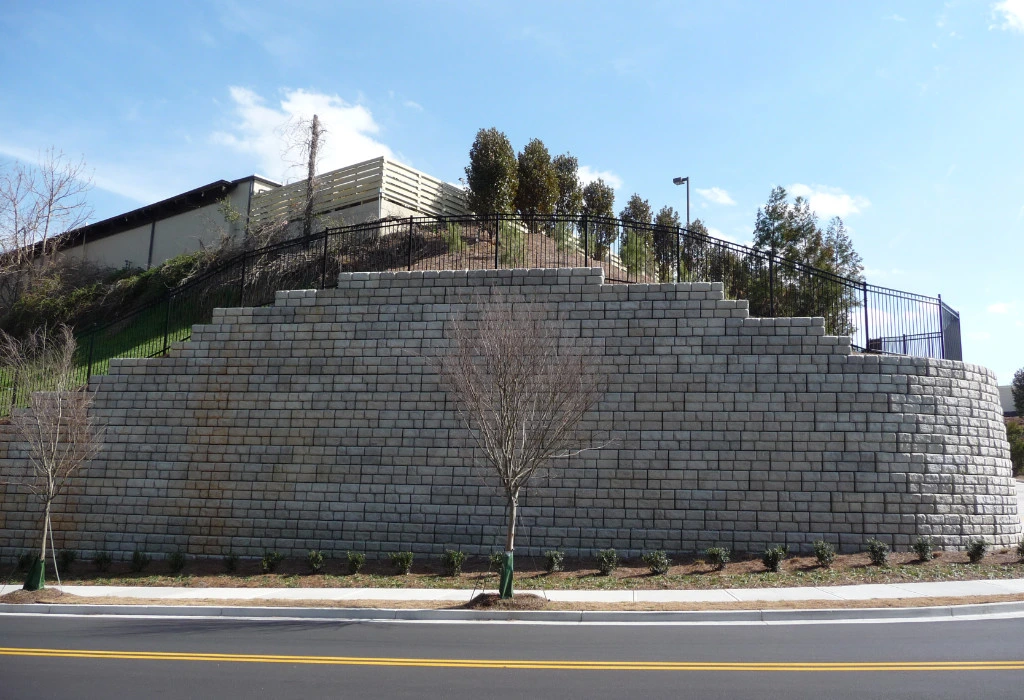
Gravity walls can be built vertically or with setback to increase resistance to retained soil pressure and accommodate terrain changes such as curves, corners, or terraced slopes.
Where wall heights exceed gravity limits (typically ~6 m depending on design conditions), reinforced systems incorporating geo grid an be used to manage additional lateral pressure while maintaining durability in wet environments.
Case Study
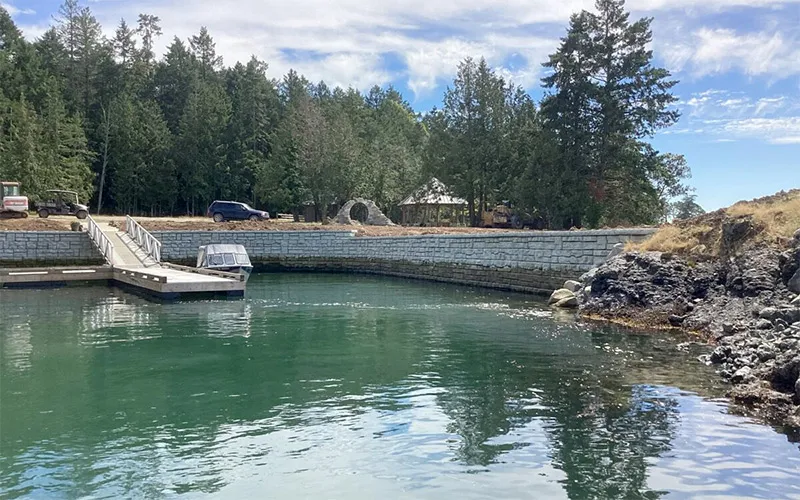
Redi-Rock Marina Rebuild on BC Southern Gulf Island
A private marina on a Gulf Islands, British Columbia waterfront property was suffering from decades of erosion and structural failure.
The existing creosote seawall was deteriorating, posing environmental risk and undermining usability of the shoreline.