
Project Overview
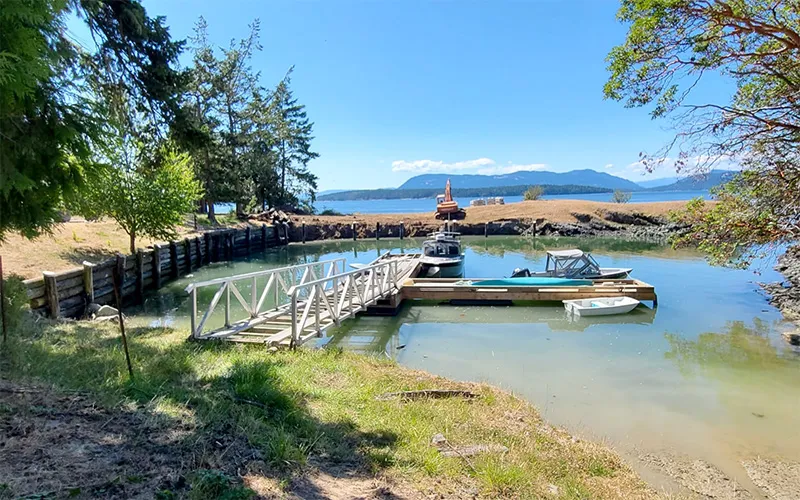
Before: decades of erosion and structural failure
A private marina on a Gulf Islands, British Columbia waterfront property was suffering from decades of erosion and structural failure.
The existing creosote seawall was deteriorating, posing environmental risk and undermining usability of the shoreline.
The property owner engaged Hyland Precast and contractor Vic City Gardens to engineer a lasting solution using Redi-Rock precast modular retaining wall systems.
1. The Problem: Failing Seawall & Erosion Threat
Before intervention, the property presented multiple major issues:
- Old creosote seawall deterioration – A 50-year-old creosote timber wall was breaking apart and leaching harmful chemicals into the seawater.
- Active erosion from marine conditions – Erosion had compromised up to 30% of the shoreline, with waves and wake from BC Ferries accelerating soil loss behind the wall.
- Unstable waterfront infrastructure – The failing wall left no reliable base for loading equipment (e.g., telehandler) and limited safe access to the shoreline.
- Environmental concerns – The old creosote posed contamination risks for marine life and water quality.
These challenges are common for BC coastal waterfront properties, where tidal fluctuations, ferry wake, and soft shoreline soils create persistent stabilization issues. The need was for a durable, marine-resistant retaining system that performs in saltwater environments while improving aesthetics.
For BC waterfront property owners, especially on coastal islands or in tidal zones, engineered modular retaining systems like Redi-Rock offer a robust alternative to failing timber seawalls.
2. The Solution: Redi-Rock Retaining Wall System
To address these problems, the project team selected the Redi-Rock precast modular retaining wall system, known for engineered strength, adaptability, and performance in water applications.
Redi-Rock blocks provide:
- Massive block weight and engineered interlock system for resisting wave forces and tides.
- Durability for marine conditions, with concrete mixes suitable for freeze/thaw and submerged environments.
- Faster installation compared to cast-in-place walls, important given tidal windows and coastal logistics.
- Aesthetic improvement, lighter and more visually appealing than the old creosote bulkhead.
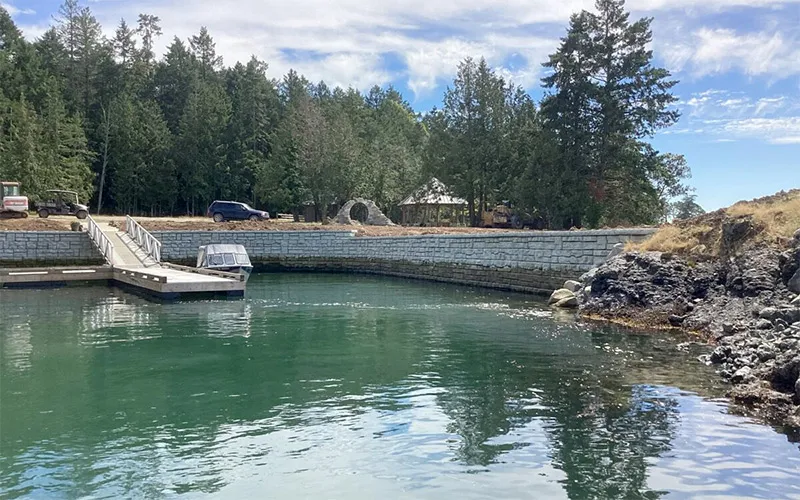
The wall was constructed in a horseshoe shape, enhancing water clarity and light reflection — an unanticipated benefit to the waterfront’s look and feel.
3. Materials and Construction
The rebuild involved a substantial engineered materials package:
Redi-Rock Modular Components
- 528 full-size blocks — The core of the wall, providing structural gravity resistance.
- 10 half blocks — Used for alignment and fit at edges.
- 80 large caps + 1 half cap — Top finishing stones for durability and appearance.
Reinforcement and Fill
- 17 tubes of 20XT geogrid — Integrated reinforcement to tie the wall into the soil where needed.
- 80 truckloads of backfill — Mostly reused clay from the original seawall excavation.
- 5,000 tons of clear drain rock and road crush — Critical for drainage and foundation stability behind the wall.
- Barge logistics — All heavy materials were delivered via two barge trips due to the island location and coastal access constraints.
- 405,000 kg total weight of Redi-Rock blocks — Massive weight providing long-term erosion resistance.
Redi Rock Retaining Walls BC’s precast modular design enabled quicker installation compared to traditional seawalls, with ease of placement from barges and equipment on site.
4. Project Outcomes
The Redi-Rock seawall rebuild delivered clear improvements:
- Eliminated erosion from tides and ferry traffic — stabilizing the waterfront for future use.
- Removed harmful creosote hazard — replaced with an environmentally friendlier concrete structure.
- Enhanced waterfront usability — stable support for equipment and expanded shoreline access.
- Improved aesthetics — the lighter, engineered wall makes the water appear clearer and enhances visual appeal.
- Long-term durability — a solution expected to last decades in a challenging marine environment.
Client feedback echoed strong satisfaction with both performance and visual results — noting that the project “stayed in budget,” “will last a lifetime,” and that guests are left “in awe of how it looks.”
Redi Rock Has 100’s of Solutions for Retaining Walls
For BC waterfront property owners, especially on coastal islands or in tidal zones, engineered modular retaining systems like Redi-Rock offer a robust alternative to failing timber seawalls. Projects like this marina rebuild show how strategic material selection and design can protect shorelines, enhance property function, and improve long-term resilience against erosion and climate stresses.
No project is without a solution.
Partner with us to find your retaining wall solutions.
Related Projects
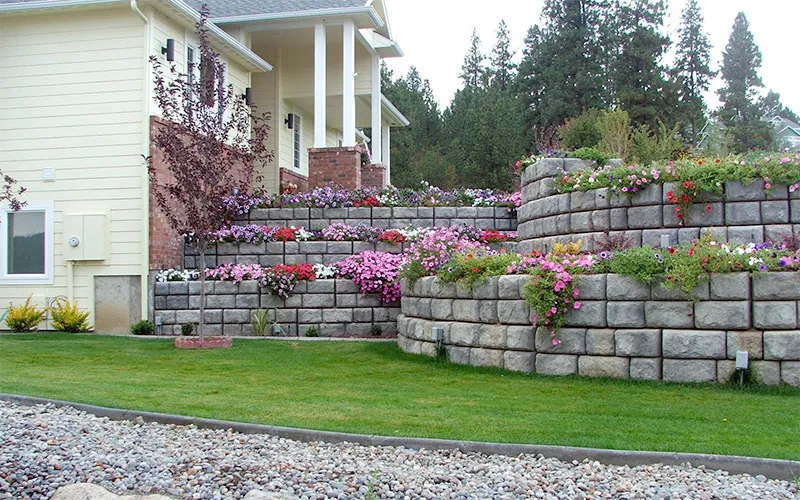
A Step-by-Step Guide for Sloped, Shoreline & Small-Footprint Properties STEP 1 — Identify the Problem to Solve Many homes across....
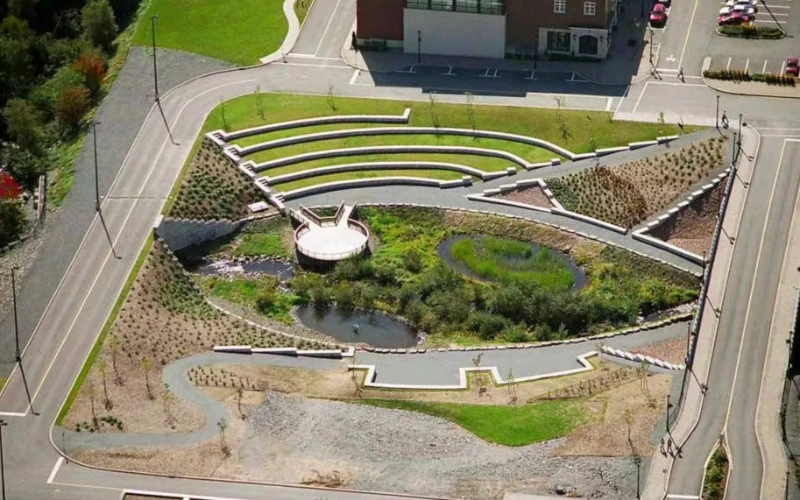
Bridge-Crossing Problem As part of a $300M redevelopment in Dartmouth, Nova Scotia, engineers were tasked with constructing multiple bridge crossings....
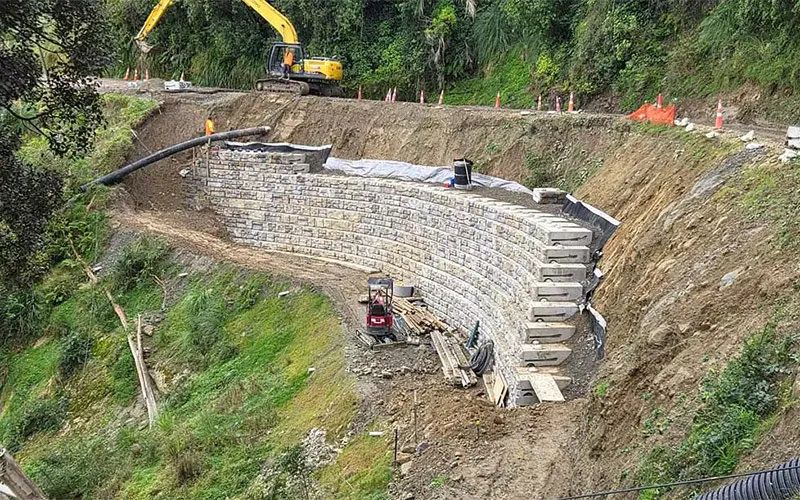
Lessons From New Zealand That Apply Directly to British Columbia Across much of British Columbia, particularly along coastal corridors and....
Project Overview Before: decades of erosion and structural failure A private marina on a Gulf Islands, British Columbia....